
Read the Instrument Type in Charles City Deed Records
A recorded instrument shows what was filed with the Circuit Clerk's records. Its name hints at the transaction. It does not replace reading. Look at the grantor, grantee, legal description, signatures, recording date, and any referenced plat or prior deed. The examples here are record categories to watch for. They are not a promise that every transfer type appears in a given Charles City search result.
| Deed Type | What It Does | Common Use |
|---|---|---|
| Warranty or grant deed | Conveys the stated interest under the instrument's terms | Read the warranties and legal description in the recorded copy. |
| Quitclaim deed | Conveys whatever interest the grantor has, if any | Do not infer full title from the instrument name alone. |
| Deed of trust | Records a security instrument associated with land | Look for a later release or other recorded instrument. |
| Executor or trustee deed | May show a transfer made by a fiduciary | Read the authority and related estate or trust references. |
| Release or judgment lien | May record a change in an encumbrance or court claim | Check the parties, parcel description and recording sequence. |
A deed transfers the interest it describes. A deed of trust or lien only records a claim or security interest. A release can change the status of an earlier encumbrance. Pull the relevant instrument and any later release. Do not assume every record under a parcel marks a change in ownership.
Follow Both Sides of the Charles City Grantor-Grantee Index
Virginia land records are usually traced through the parties named in each instrument. The grantor conveys an interest; the grantee receives it. For a recent Charles City conveyance, begin with the buyer as grantee. Note the instrument reference and description. Then search the seller as grantor to verify the prior link. When that owner later conveys the property, reverse the roles. A repeated name alone proves little. Confirm the legal description and the clues from neighboring land.
- Locate the latest deed with the present owner as grantee.
- Copy the grantor name, recording date, instrument reference and legal description.
- Search the grantor's earlier acquisition as grantee and compare the land description.
- Repeat until the needed ownership period is reached, then use deed books or microfilm for older records.
- Grantor
- The party conveying the interest described in an instrument.
- Grantee
- The party receiving the interest described in an instrument.
- Chain of title
- The ordered sequence of recorded transfers and related instruments for a tract.
- Recording reference
- The book, page or other identifier the Clerk uses to retrieve a document; confirm the local reference format.
Request a Charles City Deed Copy From Its Custodian
The Circuit Court Clerk's office sits at 10780 Courthouse Road, P.O. Box 86, Charles City, VA 23030. The Clerk's page lists hours of 8:30 a.m. to 4:30 p.m. It also notes that recording stops at 4:00 p.m. Use the official contact information to confirm the current copy procedure. Ask about certified copy availability and any fee. No current copy-fee schedule is published. For a remote request, include the names on the instrument and an approximate date. Add the book or recording reference if known. Include the full legal description as well. Ask whether the office accepts mail requests and what payment it requires. If SRA/COVERS shows the image, confirm whether the local court provides it to public users. Access conditions vary by court. Send one precise reference rather than a broad request.
Recorded, not guaranteed. The Charles City deed index points to recorded instruments; it is not a title opinion, and it cannot prove that no unrecorded interest exists. A title professional can examine the chain for a transaction.
Charles City SRA Access Separates Index Entries From Images
Virginia Circuit Court Secure Remote Access is the main entry route for circuit land records. It is known statewide as SRA/COVERS. The statewide instructions draw a clear line between index access and document images. Image access depends on the local clerk and may require a subscription or local agreement. The Charles City coverage and live fields are not guaranteed. So check the Clerk's page or ask the office before assuming an instrument can be opened from home. When an image is unavailable, save the index result and its reference. The recording date, parties, instrument type, and legal description give the Clerk a focused path. That path leads to the source. A failed name search may reflect a spelling variation. It may also reflect a different party role, or an older volume. It does not mean the deed is missing. Search grantee and grantor sides separately. Compare the parcel description before deciding a result is unrelated. The Virginia SRA guide explains the statewide access distinction on the public court site.
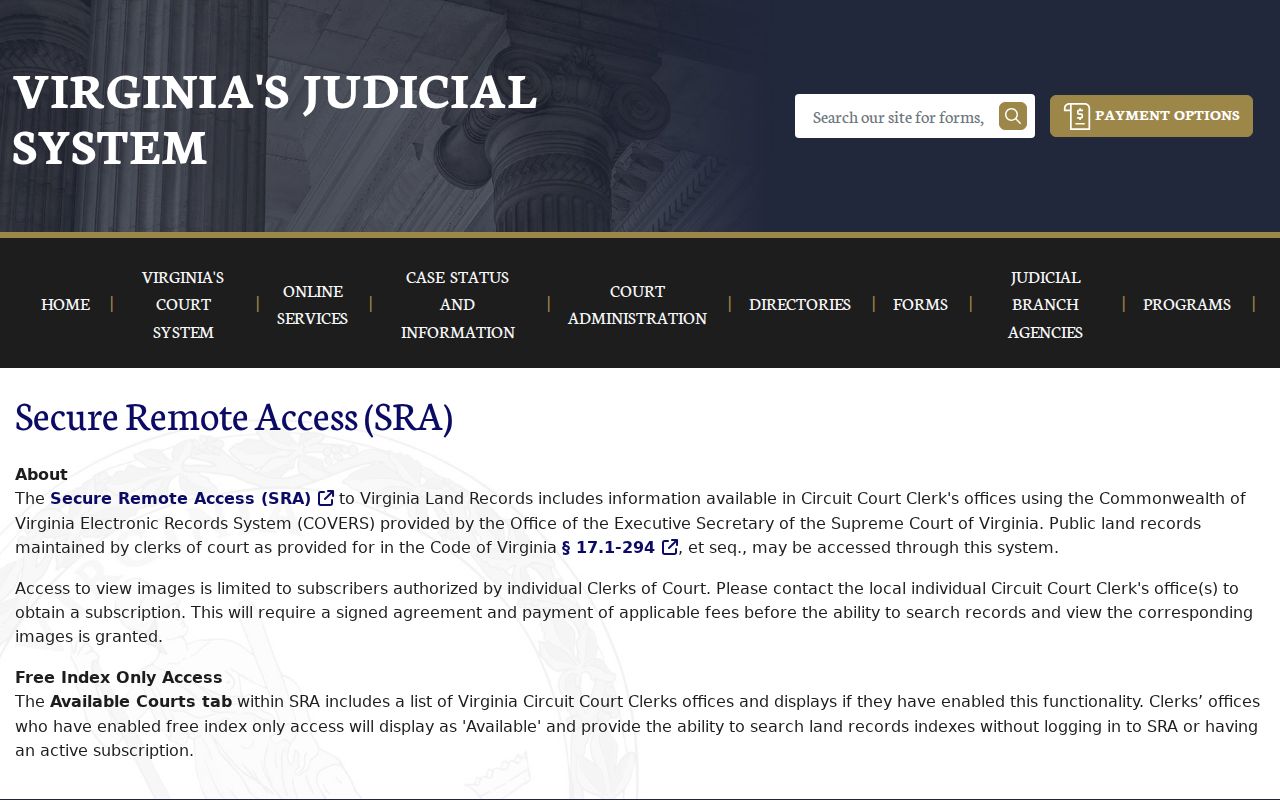
For Charles City images and certified records, the local Circuit Clerk sets the access route.
Older Charles City Deeds Are Indexed Through Library Holdings
The Library of Virginia inventory documents Charles City's general grantor deed index for 1789–1913. That historical span reaches far earlier than any modern web interface. Note the limit. The finding aid lists the index period. It does not promise that every entry is complete or digitized. Use the grantor name to find an index reference. Then follow that citation to the deed book or microfilm. For a chain crossing this period, begin with the latest deed. Take the earlier owner as grantee, repeating backward. Once the name and approximate date reach the historical index, try spelling variants. Also try local references such as a plantation, road, creek, or adjoining owner. One family may hold several tracts. Acreage and metes-and-bounds language are the key checks. The Library of Virginia Charles City inventory lists the county's deed-index series.
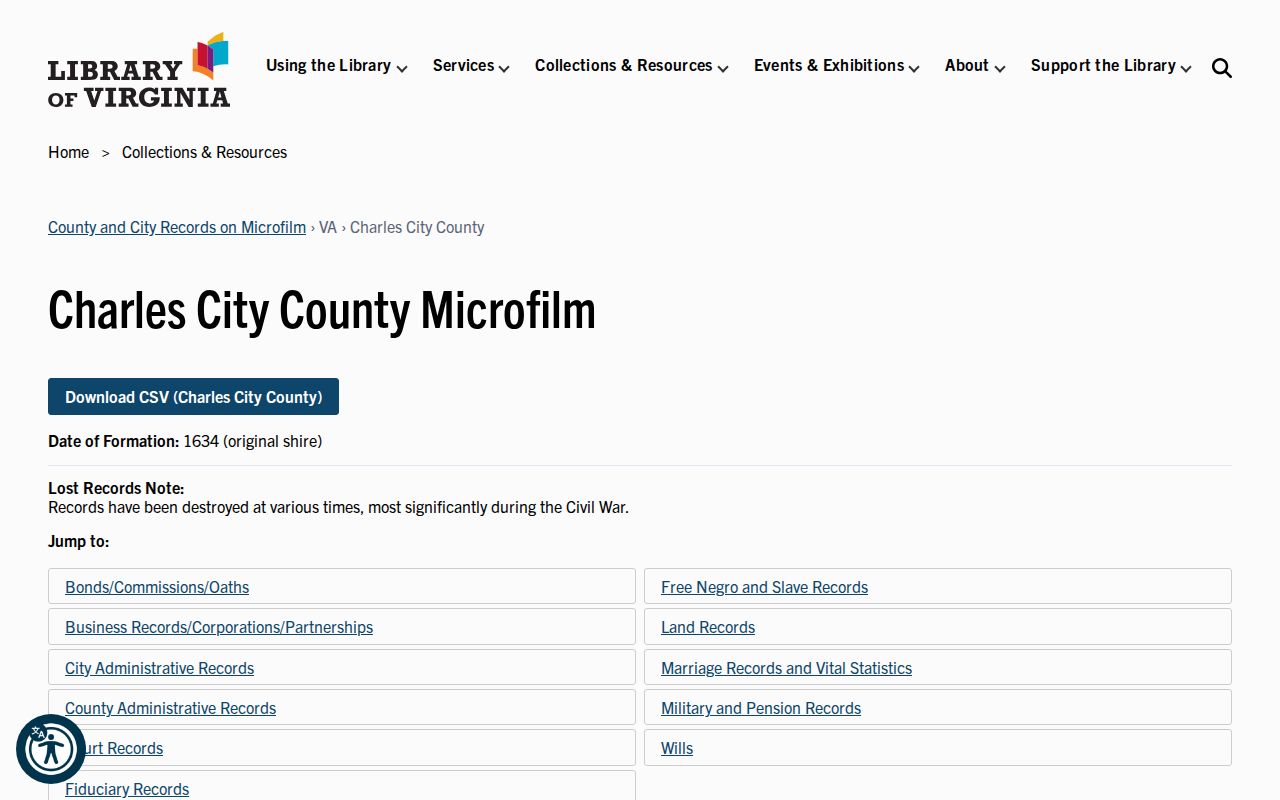
Confirm reel access and copying arrangements with the Library before a planned visit.
Use Processioners' Records Beside a Charles City Deed Chain
The Library of Virginia holds Charles City processioners' records covering 1880 through 1946. Processioners walked the boundaries. Their notes describe adjoining owners, creeks and road lines as they existed then. That context helps when an old deed description reads like a riddle. But a processioners' entry never proves today's legal line. Only a current survey can do that. Start with the deed. Fix the tract in mind through its parties and land description. Then hunt for processioners' references to the same land, neighbor or landmark. A match can clarify a creek boundary or separate two branches of one family. Record the book or reel citation beside the deed. So anyone can retrace the steps later. Where a historic line affects a purchase, easement or dispute, put the evidence in front of a licensed surveyor or attorney.
Read Deeds of Trust, Releases and Judgments as Separate Events
A Charles City land-record entry does not always move title. A deed conveys whatever interest its language describes. A deed of trust works differently. It secures an obligation. A later release shows that the security instrument has been satisfied. Judgments and other liens stand apart as encumbrance records of their own. So chase the later instruments tied to the same parties and tract. One index result rarely tells the whole story. Read dates and instrument references in order. A release may name a trustee, lender or borrower. That person may never appear in the deed itself. A judgment search can pull you into court records rather than a conveyance. The Virginia Judiciary runs case-information pages for court matters. The county clerk's land-record index is the route for recorded instruments affecting land. No single search merges these systems. The Virginia Judiciary case-information hub sits apart from SRA/COVERS. It displays the statewide case-search entry point.
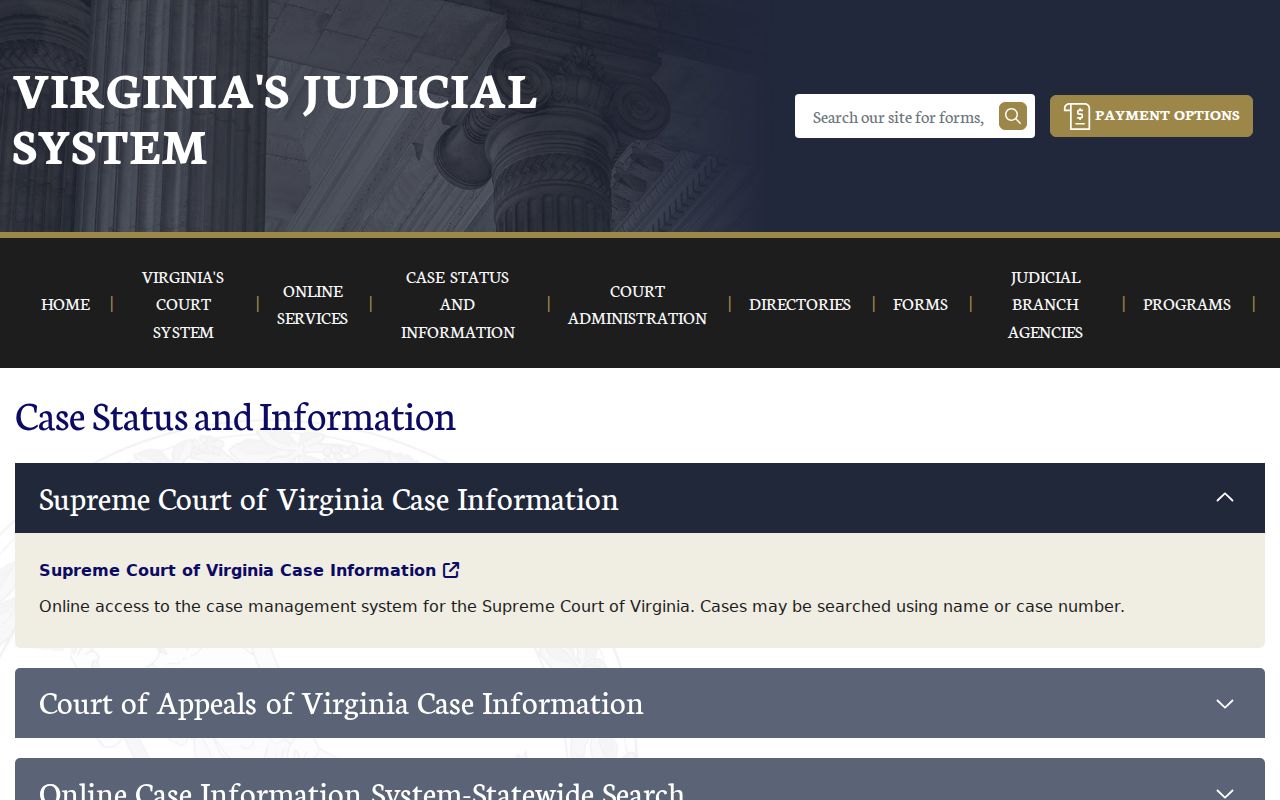
Court questions go to the case-information pages; recorded Charles City instruments go through the Circuit Clerk's land index.
Historical Charles City Deed Search Needs a Locality Check
Charles City County dates to 1634. It began as a shire on both sides of the James River, and it was divided in 1702. Older instruments locate land by rivers, plantations, old roads and neighboring landowners. None of that maps neatly onto a modern address search. A present parcel may hold only a slice of an older description. A historical place name may not match any label on a current map. Keep each fact cluster intact: date, county, names and boundary calls together. Compare later deeds that carved up or conveyed pieces of the original tract. Treat the historical index as a guide rather than the proof itself. For a window into the county's earliest record culture, the Library of Virginia preserves seventeenth-century Charles City court material. That archive enriches local history. It cannot replace the transfer chain in the deed books. Tracing owners backward? The former owners guide continues the method with a focus on ownership depth over time.