
Lay Out the Charles City Deed Chain Before Searching
Every deed chain search needs a plan first. Begin with the most recent recorded deed and step back one owner at a time. Never invent a transfer date, person, or book reference the documents do not state, because one fabricated link can derail the whole sequence. Copy each grantor and grantee exactly as written. For historical work, the Library of Virginia documents a general grantor index covering 1789 through 1913. The Clerk can confirm the current SRA image span.
| Source | Years It Covers | Where Held | What It Shows |
|---|---|---|---|
| Latest deed | Current grantee ← prior grantor | Recording date and reference from instrument | Verify legal description against the subject parcel |
| Prior acquisition | Prior owner as grantee ← earlier grantor | Search the grantor-grantee index | Match acreage and boundary calls |
| Historic index step | Earlier named grantor and grantee | Library of Virginia index, 1789–1913 | Follow the citation into deed book or microfilm |
| Boundary context | Processioners and adjoining owners | Library series, 1880–1946 | Context only; not a modern survey |
Recent transfers live with the Circuit Court Clerk. Start there and pull the newest instruments. If the chain runs past the confirmed online index span, shift to the deed books and the Library's microfilm finding aid. A historic plat or processioners' note can explain a boundary reference, but the recorded instruments remain the true ownership trail.
Walk Backward Through Charles City Grantors and Grantees
Read the newest deed's grantee first. That party received the interest. The grantor is whoever conveyed it. Take that grantor's name into the earlier index and search it as a grantee instead. Repeat the cycle only when the legal description, acreage, and boundary calls all point to the same land, because a chain follows instruments rather than a string of familiar names.
- Find the latest deed with the present owner as grantee.
- Record the grantor, date, instrument reference and full legal description.
- Search that grantor as grantee in the earlier record and compare the tract language.
- Continue until the research period is reached; use deed books and microfilm for older material.
- Grantor / grantee
- Parties conveying and receiving the interest in a recorded instrument.
- Chain of title
- The ordered sequence of past deeds and related records for a tract.
- Legal description
- The instrument's written land definition, which can identify an older rural parcel better than an address.
How Far Back the Charles City Index Is Documented
The Library of Virginia inventory lists a Charles City general grantor deed index covering 1789 through 1913. That is the documented historical span. It makes no claim about when the county's modern SRA index begins or ends. Ask the Circuit Court Clerk what current online coverage exists. Use the Library inventory to plan earlier research.
Use historical records responsibly. Former-owner research can document land transfers and house history. Do not use records to target or harass a person, and do not treat a historical name as proof of a present address.
Use the Library of Virginia to Find Earlier Charles City Owners
The Library of Virginia's county inventory documents a Charles City general grantor deed index for 1789 through 1913. It works as a finding aid. Not every entry or underlying deed sits online. Search the index for the person who conveyed the tract. Carry that reference into the deed book or microfilm. Copy the full legal description before stepping back another generation. Older records may describe land by the James River, a creek, a plantation, a road, or an adjoining owner. Try alternate spellings and name forms. Compare acreage and boundary calls across every candidate deed. When the chain crosses generations, build a dated sequence and note any change in the tract rather than assuming each deed moves the exact same parcel. The Library's Charles City finding aid lists the county's deed and court holdings.
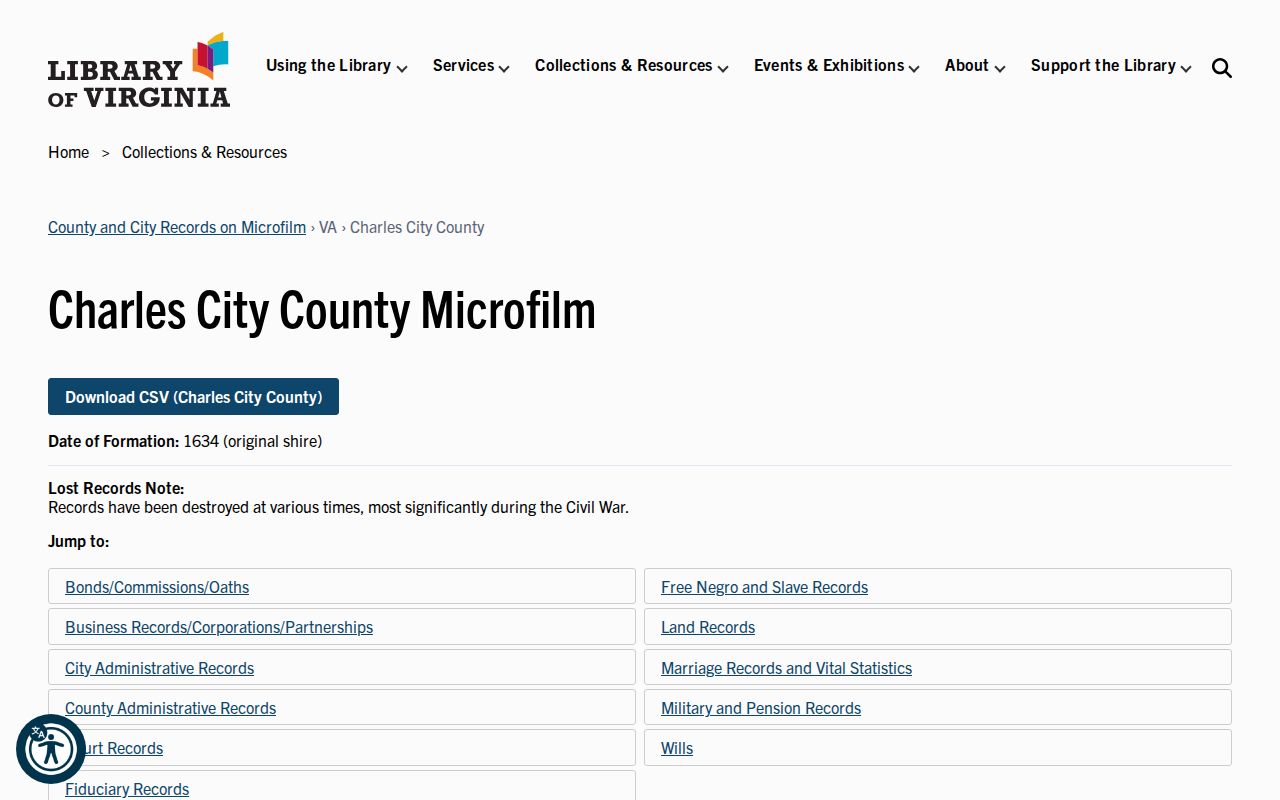
Confirm reels, books, and viewing steps with the Library first.
Connect Charles City Processioners' Notes to a Former Owner
The Library inventory lists Charles City processioners' books from 1880 through 1946. These volumes record historical boundary walks. They can name an adjoining owner or a road line. That detail helps when a deed names a neighbor. It also helps when a landmark identifies which tract the older instrument describes. Processioners' books never set a modern boundary. Treat them as interpretive aids. Compare the notes with deeds, recorded plats, and a current map. Draw no conclusion about a line before that check. A boundary can affect a sale, building project, or dispute. In that case, ask a licensed surveyor to weigh the record evidence against conditions on the ground.
James River Boundary Changes Affect Historical Charles City Chains
Charles City began in 1634 as a shire spanning both sides of the James River. The county was divided in 1702. Older deeds may reflect a different jurisdiction. Note the instrument date whenever a deed uses an old county or river description, and follow later transfers forward to see how the land was described under the current jurisdiction. Plantation names appear often in these records. Shirley, Berkeley, Westover, Edgewood, North Bend, Piney Grove at Southall's Plantation, and Sherwood Forest can orient a historic search. They are landmarks, not parcel identifiers. Verify every link through names, acreage, and boundary calls in the recorded chain.
Estate Transfers Can Change the Name in a Charles City Chain
Not every owner sold land personally. A prior owner may have died. Or the owner conveyed through an executor or trustee, or held title in an entity. That explains the odd next grantee name. It looks nothing like the family name in an older deed. Check the exact instrument and its authority. Do not skip an unfamiliar party. Circuit Court records include wills alongside land instruments. Estate procedure and deed recording remain separate records, so search each set on its own. When a trustee or executor deed appears, note the stated role. Also note the estate or trust reference. Not every transfer runs from one seller to one buyer. Whatever the form, the deed must match the property's legal description. Only then does it belong in the chain.
Use Genealogy Sources Only to Clarify Charles City Names
Virginia's Department of Health keeps a genealogy page covering open-record indexes and historical microfilm. These tools have real value for a Charles City property search. They can separate two residents who shared a name. They can also pin a family to a decade. What they cannot do is prove that someone owned land. Ownership still turns on the recorded instrument itself. So let the deed, will, or other transfer paper carry the evidentiary weight in any chain of title.
The Virginia Department of Health genealogy resource lays out its index and microfilm options. Read its instructions before you plan a records request.
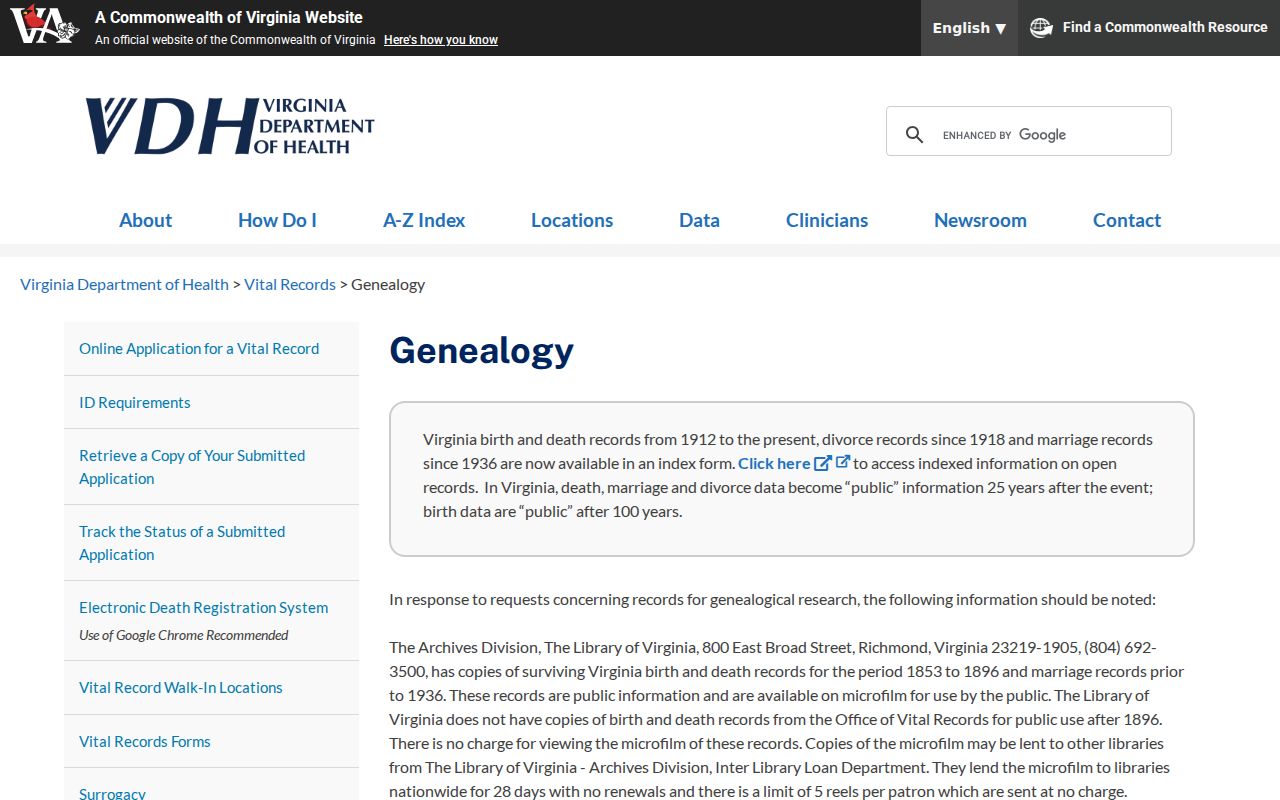
Let family-history clues narrow the candidates. Then go back to the recorded instrument, compare its legal description, and only then add the name to a Charles City property chain.
Resolve a Break in a Charles City Ownership Chain
A stalled grantor search is rarely a dead end. Try spelling variants, initials, and married names. Then work the grantee side of the same transfer. Compare the deed description against nearby roads, creeks, and adjoining parcels. Older Charles City instruments often predate any modern street address. Family members sharing one name complicates things further. A missing online result may simply mean the period calls for a deed book or microfilm search in person.
Build a chain worksheet with one row per instrument and a source citation for each. Mark a gap as unresolved. Never fill it with a presumed owner of record. The historical index and processioners' records can surface an older step. But gaps that touch a live transaction belong with a title professional. For today's owner rather than the deeper chain, the current owner record guide is the better stop.